Imagine going to the doctor, feeling sick and overwhelmed with the world, and getting a prescription to walk on grass. Sometimes, we just need to plug back into nature.
This article sets out some therapeutic and helpful options:
“Write Your Own Nature Prescription
You don’t need to see your doctor to start experiencing the benefits of being outdoors. Here are some simple tips from our experts on how to incorporate nature into your daily routine:
Match your sleep schedule to the sun. If your schedule allows, try to get up as the sun rises and wind down as the sun sets.
Get early morning sun, preferably by walking outdoors. You could park farther away from your work entrance or take the dog out for a quick stroll after breakfast.
Spend five to 20 minutes every day in green spaces. Sip your coffee on the deck instead of on the couch, or take your lunch break under a tree.
Try “grounding” or “earthing.” This is where the “go touch grass” idea comes in. Walk barefoot to get the mail or kick off your shoes the next time you’re at an outdoor concert. (Just be careful to watch where you’re going so you don’t step on anything painful!)
Practice nature mindfulness. When you’re outdoors, put away your phone. Instead, watch the clouds, listen to the birds or simply observe your surroundings.
Grow a garden. And make sure to get your hands dirty: There are healthy microbes in the soil. If your access to outdoor space is limited, even an indoor herb garden can provide mental health benefits.”
Excerpt From “How Nature Heals” BY Charlotte Hilton Andersen, Reader’s Digest (May/June 2025)
So much of living is grief, I’ve found. Grief at the loss of people, places, times we’ve loved. Grief over relationships that are now stilted and strained which once felt unbridled and free. Grief over the not knowing, and sometimes the knowing. Grief over lost faith you once had in people who now are difficult to recognize. Grief everywhere, and it can lead to separation. Pulling away in anticipatory fear of yet more grief. And, that will lead to loneliness.
Perhaps our loneliness epidemic would be eased if we all were to slow down and notice each other, pause to realize we are here for each other, and be vulnerable enough to allow ourselves to see and be seen.
Perhaps the antidote to grief is attention, not because you will avoid the ultimate loss, but because you will capture the moments now. Cherishing our children while we are here. Nurturing our friendships while we are here. Noticing
Mary Oliver’s poems open us in so many ways– to nature, to each other, to our own hidden places. Perhaps this one on loneliness will speak to you today:
Loneliness
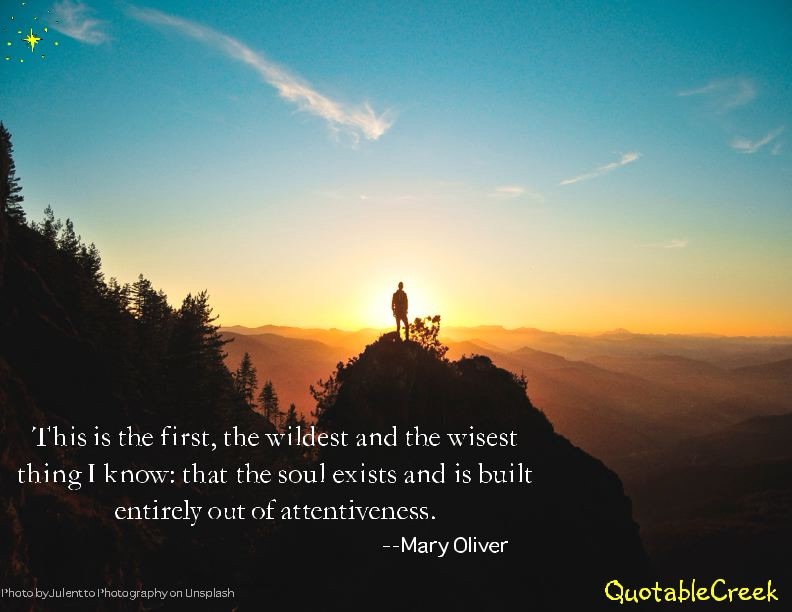
When loneliness comes stalking, go into the fields, consider the orderliness of the world. Notice something you have never noticed before,
like the tambourine sound of the snow-cricket whose pale green body is no longer than your thumb.
Stare hard at the hummingbird, in the summer rain, shaking the water-sparks from its wings.
Let grief be your sister, she will whether or not. Rise up from the stump of sorrow, and be green also, like the diligent leaves.
A lifetime isn’t long enough for the beauty of this world and the responsibilities of your life.
Scatter your flowers over the graves, and walk away. Be good-natured and untidy in your exuberance.
In the glare of your mind, be modest. And beholden to what is tactile, and thrilling.
I was robbed recently. I was enjoying lunch with a treasured friend, undoubtedly lost in the delightful way she tells stories and looks at life, when my purse was taken right off my chair as I sat there unaware. The restaurant’s security cameras showed two women, the perps, dressed in hot pink and bright orange, casually taking my purse and then driving off in their Mercedes (!) to Target where they started to put my credit card to work. The nerve.
I realized this incident had affected me more than I realized when the dreams came. Home invasion dreams where I was in my childhood home trying desperately to figure out how to protect my mother. I grabbed her and ran to the bedroom door, but men were trying to get in there, too, in tactical gear and heavily armed. I was running through all the escape possibilities in my head, realizing we might be trapped and I wouldn’t be able to save her, when I woke up, heart pounding.
So how do I quell these troubled waters. First, of course, was to cancel the cards and block my phone. But the next step is maybe the best for easing the troubled mind. Mr. Rogers reminded children to look for the helpers in any crisis. For me, helpers would include that friend, a retired nurse, cool under pressure, who dashed to my car to prevent the thieves, who now had my keys, from stealing it. I had visions of her clinging to the hood while they used the windshield wipers to dislodge her, but that’s my brain in overdrive not the reality. Instead, there was another helper who found my purse, sans phone and credit cards, abandoned in the bushes. Due to the kindness of the people eating around us who had responded to my yelps of distress and pointed me out to her, I got my purse, and key, back. And then there was the restaurant manager who calmly rebuffed my repeated and emphatic suggestions to plaster warnings about thieves everywhere, but instead saved all the identifying information on video for the police to follow up. He mentioned we all need to cultivate situational awareness.
Situational awareness. And therein lies the rub. I want to live in a world where I can have a leisurely lunch with my friend and no one is casing the joint, looking for some unsuspecting mark to rob. That would be a better world! But it’s not this world. So if one of us needs to change, the world or me, it will need to be me.
And as I stewed on these words—situational awareness—it occurred to me that they apply to pretty much everything. We have to stay focused on the world we have, the reality, and bring our attention to that place and circumstance and base our decisions and actions on that. Not on the world we wish we had, but the one we do have. The place we are. The reality we must confront. That’s where the real work gets done and progress gets made.
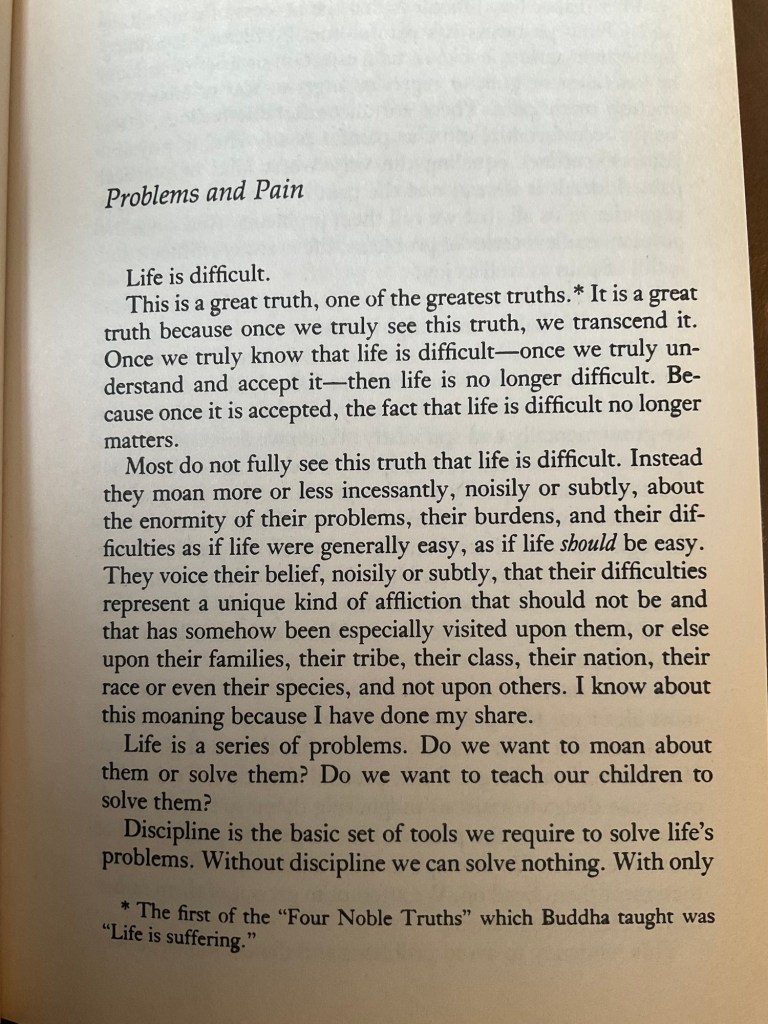
In his book, The Road Less Traveled, M. Scott Peck starts with the given, Life is difficult:
He goes on to say some equally profound things about how if the world isn’t aligning with our understanding of it, it is our understanding that must change, not that we should lie to ourselves to pretend the world supports our image. He likens it to maps. If the map you’re using isn’t getting you to where you want to go, it is the map that’s wrong, not the reality. The map must change.
As we look around, where are the places that things don’t make sense? The places our maps aren’t getting us where we want to be? Maybe things that are different now than they once were? Where do we need new maps?
We need to stay dedicated to reality, as much as it might trouble us, and adjust our maps so we can get back on track. Peck concludes :
The more effort we make to appreciate and perceive reality, the larger and more accurate our maps will be. But many do not want to make this effort. Some stop making it by the end of adolescence. Their maps are small and sketchy, their views of the world narrow and misleading. By the end of middle age most people have given up up the effort. …Only a relative and fortunate few continue until the moment of death exploring the mystery of reality, ever enlarging and refining their understanding of the world and what is true.
Mr. Rogers inspired generations to recognize the beauty of their neighborhoods, to search for the helpers for inspiration in any crisis, and to recognize that each individual has value and inherent worth. His words continue to echo through both good and bad times. He reminded us that it wasn’t our exteriors he liked or admired, but our interior selves, our character and trustworthiness.
Today consider his reminder to remember all those people who believed in you and made you who you are– someone capable of making the good choices to make this world a better place.
I’d like to give you all an invisible gift. A gift of a silent minute to think about those who have helped you become who you are today. Some of them may be here right now. Some may be far away. Some, like my astronomy professor, may even be in Heaven. But wherever they are, if they’ve loved you, and encouraged you, and wanted what was best in life for you, they’re right inside your self. And I feel that you deserve quiet time, on this special occasion, to devote some thought to them. So, let’s just take a minute, in honor of those that have cared about us all along the way. One silent minute.
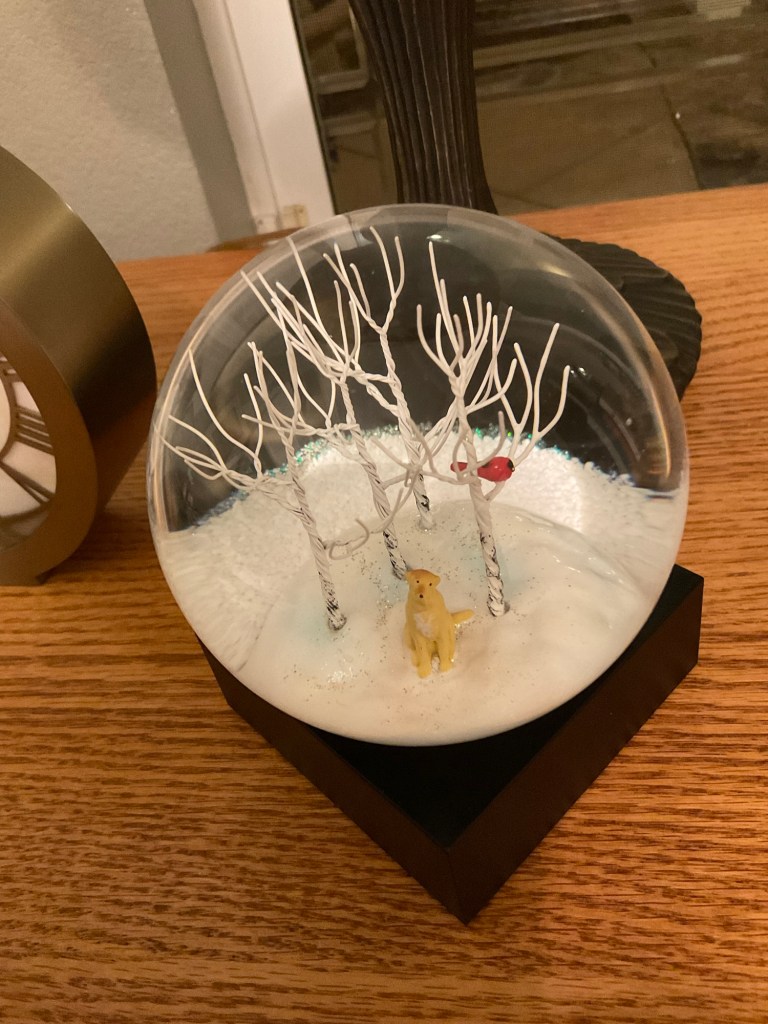
I recently bought a snow globe of a Labrador and a cardinal in the woods.
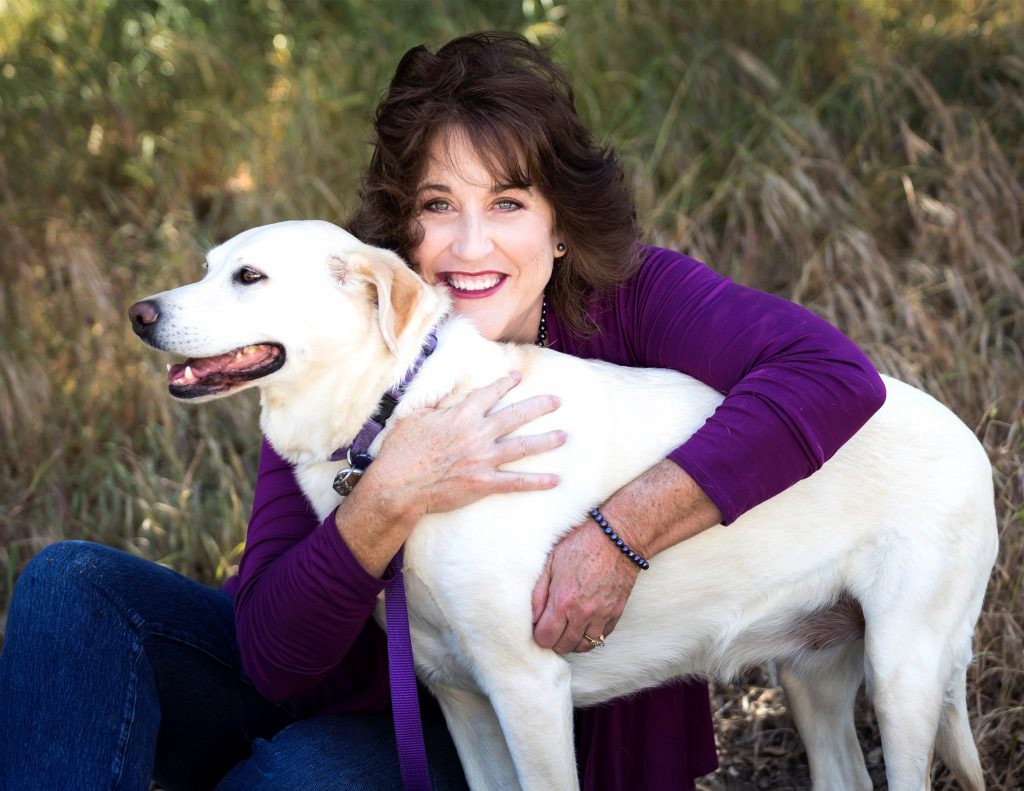
These two remind me of the unconditional love I was lucky enough to receive from my late dog, Honey
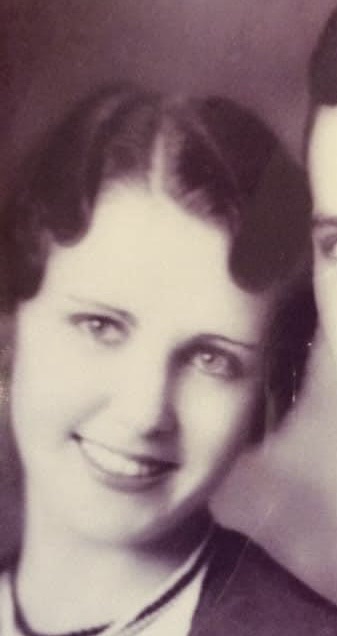
And my late, and very much beloved grandmother.
Honey was my soul animal, always with me, zooming with me into school visits during the pandemic, meeting and loving every neighbor we encountered on our long walks, my constant companion.
My grandmother loved me unconditionally, always eager to hear my stories, encouraging me in my writing, sharing life as two brunette mothers of redheads, growing together in our faith journeys.
I love having them there with me symbolically on my desk in this little snow globe because, frankly, grief is hard. Losing those precious to us leaves a gaping wound. But when we remember them, we remember the love they gave us, too, and that part feels good. When we carry them with us like that, they are still here.
(here is the root of the root and the bud of the bud
and the sky of the sky of a tree called life;which grows
higher than soul can hope or mind can hide)
and this is the wonder that’s keeping the stars apart
i carry your heart(i carry it in my heart)
And as we go on, past the loss, we carry those who have loved us with us in our hearts, giving us comfort and strength. We carry them with us, and, with that, we carry the unconditional love they gave that still sustains us, even now.
As we age, there is loss. That loss is like a presence that follows us relentlessly like a shadow. No avoiding it. No pretending. We are mortal. The people we love are mortal, perhaps imminently so. This is part of the rules of engagement. And while most of us avoid thinking too much about it, poets like Mary Oliver offer life instructions:
To live in this world, you must be able to do three things:
To love what is mortal
To hold it against your bones knowing your own life depends on it;
And, when the time comes, to let it go, to let it go.
I honestly don’t know which of these three rules is the hardest. Right now, they each seem nearly impossible. But having the courage to follow these instructions feels like the answer.
Her full poem is below.
Look, the trees are turning their own bodies into pillars
of light, are giving off the rich fragrance of cinnamon and fulfillment,
the long tapers of cattails are bursting and floating away over the blue shoulders
of the ponds, and every pond, no matter what its name is, is
nameless now. Every year everything I have ever learned
in my lifetime leads back to this: the fires and the black river of loss whose other side
is salvation, whose meaning none of us will ever know. To live in this world
you must be able to do three things: to love what is mortal; to hold it
Whom we claim as our heroes is telling. Today, in these troubled, divided times, who is acting heroically? We don’t know how our or this story will end, but we do know the values we hold to be worth fighting for: honesty, self-sacrifice, honor, integrity, the common good. As we enter the day, let us hold true to our values to meet life’s challenges in hope that those everyday interactions spread ripples of good.
Enjoy these words from Heather Cox Richardson in honor of MLK, Jr. Day:
You hear sometimes, now that we know the sordid details of the lives of some of our leading figures, that America has no heroes left.
When I was writing a book about the Wounded Knee Massacre, where heroism was pretty thin on the ground, I gave that a lot of thought. And I came to believe that heroism is neither being perfect, nor doing something spectacular. In fact, it’s just the opposite: it’s regular, flawed human beings choosing to put others before themselves, even at great cost, even if no one will ever know, even as they realize the walls might be closing in around them.
It means sitting down the night before D-Day and writing a letter praising the troops and taking all the blame for the next day’s failure upon yourself in case things went wrong, as General Dwight D. Eisenhower did.
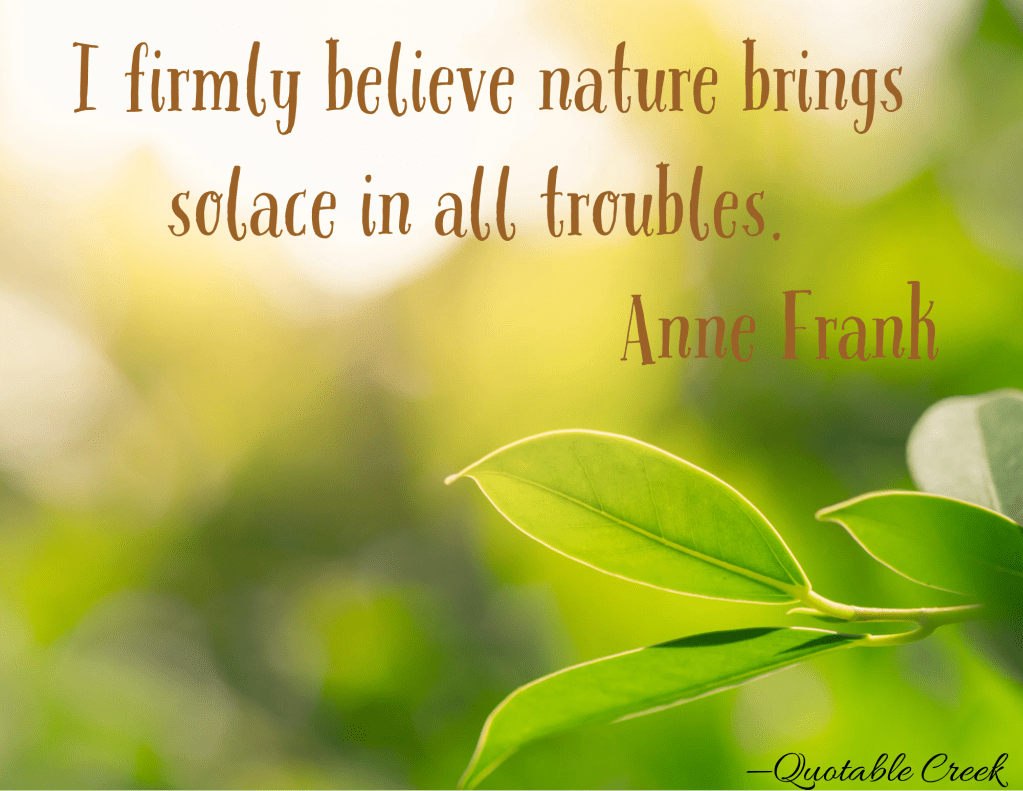
It means writing in your diary that you “still believe that people are really good at heart,” even while you are hiding in an attic from the men who are soon going to kill you, as Anne Frank did.
It means signing your name to the bottom of the Declaration of Independence in bold script, even though you know you are signing your own death warrant should the British capture you, as John Hancock did.
It means defending your people’s right to practice a religion you don’t share, even though you know you are becoming a dangerously visible target, as Sitting Bull did.
Sometimes it just means sitting down, even when you are told to stand up, as Rosa Parks did.
None of those people woke up one morning and said to themselves that they were about to do something heroic. It’s just that when they had to, they did what was right.
On April 3, 1968, the night before the Reverend Doctor Martin Luther King Jr. was assassinated by a white supremacist, he gave a speech in support of sanitation workers in Memphis, Tennessee. Since 1966, King had tried to broaden the civil rights movement for racial equality into a larger movement for economic justice. He joined the sanitation workers in Memphis, who were on strike after years of bad pay and such dangerous conditions that two men had been crushed to death in garbage compactors.
After his friend Ralph Abernathy introduced him to the crowd, King had something to say about heroes: “As I listened to Ralph Abernathy and his eloquent and generous introduction and then thought about myself, I wondered who he was talking about.”
Dr. King told the audience that if God had let him choose any era in which to live, he would have chosen the one in which he had landed. “Now, that’s a strange statement to make,” King went on, “because the world is all messed up. The nation is sick. Trouble is in the land; confusion all around…. But I know, somehow, that only when it is dark enough, can you see the stars.” Dr. King said that he felt blessed to live in an era when people had finally woken up and were working together for freedom and economic justice.
He knew he was in danger as he worked for a racially and economically just America. “I don’t know what will happen now. We’ve got some difficult days ahead. But it doesn’t matter…because I’ve been to the mountaintop…. Like anybody, I would like to live a long life…. But I’m not concerned about that now. I just want to do God’s will. And He’s allowed me to go up to the mountain. And I’ve looked over. And I’ve seen the promised land. I may not get there with you. But I want you to know tonight, that we, as a people, will get to the promised land!”
People are wrong to say that we have no heroes left.
Just as they have always been, they are all around us, choosing to do the right thing, no matter what.
Wishing us all a day of peace for Martin Luther King Jr. Day 2026.
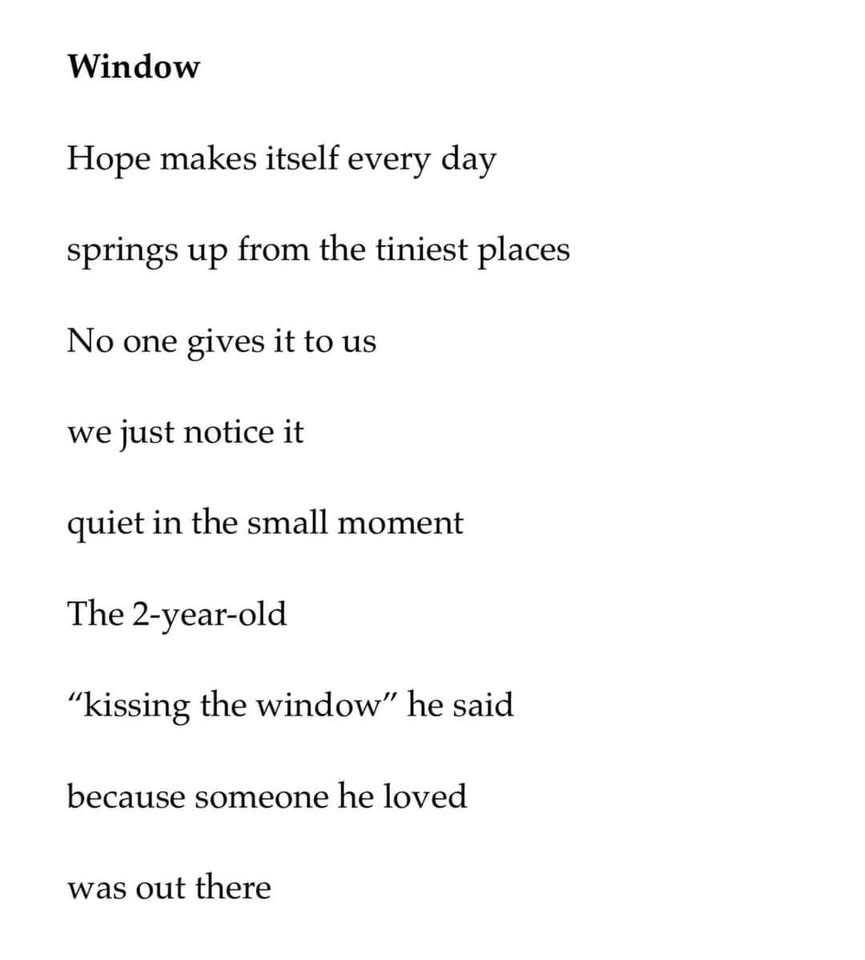
Today, notice signs of hope in unlikely places. In the smile of a baby, the fledgling arguments for peace by a child, the chink in the armor of an opponent.
Have you ever been at your wits’ end, and then someone’s kind words literally change your whole day and outlook? We can forget how simple words can make profound differences.
Consider this story from NPR:
STEPHANIE COLE: There I was in my black skirt and my white blouse and ready to go the first day. And I had been trained but very, very quickly. And as is true in a department store during Christmas, it was just bustling. You know how it is at Christmas, when everybody’s out shopping and everybody’s in a hurry and all these people around. This woman comes up to me with, I think, a Christmas tree ornament she wanted to buy, and I freeze. I just freeze. All of a sudden, I can’t remember anything. I can’t remember how to run the cash register. I can’t remember anything about the transactions. I am just absolutely frozen – and probably very close to tears. Just – I so wanted this to go right, and it was going so wrong.
She looked at me and paused and, with such a kind expression on her face, said, it’s all right. Take your time. I’m not in a hurry. And that was the release. All of a sudden, I could breathe, I could wait till somebody else could help me. It was going to be OK. It made such an impression that all these years later, not only do I still remember it, but I find myself – those words coming out of my mouth on numerous, many, many occasions over the years. You know, you encounter somebody whose first day on the job or they’re just having a bad day and things are really – you can tell they’re in a bad place. And you can say, it’s OK. I’m not in a hurry. Take your time. And it always makes the situation better. Always, always.
And so this woman, I can’t really remember her face – and certainly, she’s probably dead by now, given how old I was and how old she was – but she gave me that gift without knowing she gave me that gift, and it’s lasted all these years.